Watched 50 Parenting Videos with My Daughter: This App Made Us Both Learn New Skills
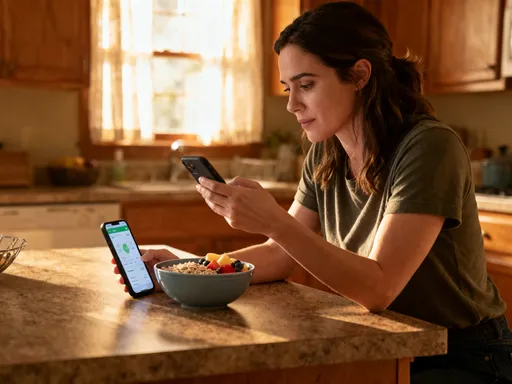
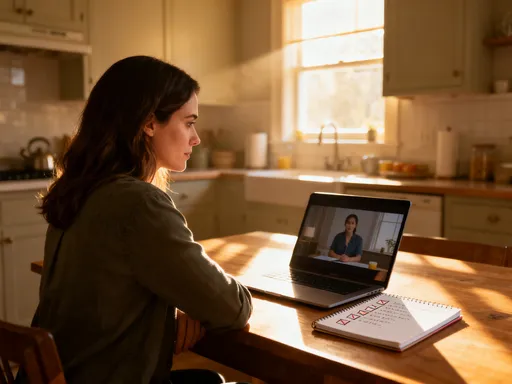
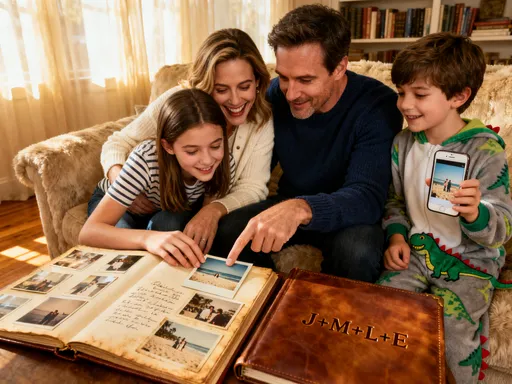
Remember those evenings when you're scrolling through videos, hoping to find something fun and useful for your child—only to end up wasting time? I felt the same—until we discovered a simple tool that changed our routine. Now, instead of passive watching, we learn together. It turns everyday moments into skill-building adventures, and honestly, it’s brought us closer. This isn’t about screen time guilt—it’s about making screens work *for* us. We still watch videos, but now we pause, talk, try things, and laugh together. The difference? We’re not just sitting side by side—we’re truly connecting, learning, and growing, one small click at a time.
The Problem with "Just Watching" Videos Together
Let’s be real—how many times have you sat beside your child, watching a so-called educational video, only to realize ten minutes later that neither of you can remember what it was about? I’ve been there more times than I’d like to admit. At first, I thought I was doing something good by being present, by not just handing over a tablet and walking away. I believed that just being there, watching alongside my daughter, counted as quality time. But the truth slowly sank in: we weren’t really *doing* anything together. We were just two people sharing the same space, eyes on the screen, minds elsewhere.
There was no conversation. No real engagement. Just passive viewing. And while the videos often had bright colors, cheerful voices, and promises of learning, the outcomes were… underwhelming. My daughter would watch a craft tutorial and never pick up glue or scissors afterward. She’d see a story about kindness but not talk about it later. I started to wonder: was this really helping her? Or was it just digital babysitting with a side of guilt relief? The moment of clarity came after we watched our 50th parenting-focused video—one about emotional regulation for kids. I turned to her and asked, “So what did the girl in the video do when she felt angry?” She looked at me, blinked, and said, “I don’t know. She was yelling?” That hit me hard. We had spent 12 minutes together, but we hadn’t learned anything *together*.
That’s when I realized the missing ingredient wasn’t more content or fancier animations. It was interaction. Real, back-and-forth, hands-on engagement. Without it, even the most well-designed videos were just background noise. I didn’t need another endless playlist of expert advice or parenting hacks. What I needed was a way to turn screen time into shared doing—something that invited us both in, not just as watchers, but as participants.
How Health Consultation Platforms Are More Than Medical Advice
When I first heard about digital health platforms, I assumed they were only for things like virtual doctor visits or checking symptoms when the clinic was closed. And yes, those are valuable. But as I dug deeper—mostly out of curiosity during one late-night parenting spiral—I discovered something unexpected. Some of these platforms, especially the ones built with families in mind, now offer much more than medical consultations. They include guided learning paths focused on child development, emotional well-being, and even parent-child connection. And tucked quietly inside one of them was a feature that would change how we used screens at home.
This particular platform wasn’t flashy. No cartoon mascots, no autoplay videos. Instead, it offered short, research-backed modules designed for parents and kids to explore together. One section, labeled “Growing Together,” caught my eye. It included short videos followed by simple prompts: “Try this breathing exercise with your child,” or “Ask your child to show you how they calm down.” At first, I was skeptical. Could a screen-based tool really help us connect more deeply? But I decided to give it a try, mostly because I was tired of feeling disconnected despite all the time we spent together.
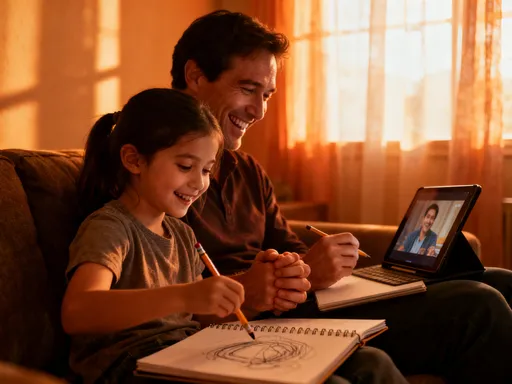
What surprised me was how gently it invited participation. It didn’t demand hours of our time. No downloads, no complicated setup. Just a five-minute video about expressing emotions, followed by a question: “Can you and your child draw how you’re feeling right now?” I looked at my daughter, who was curled up beside me, and said, “Wanna try something fun?” She nodded, and we grabbed crayons. We didn’t compare drawings or judge them. We just shared. And in that moment, something shifted. It wasn’t the drawing that mattered—it was the fact that we had done it together, prompted by something the app suggested. That small act opened a door. From that night on, we didn’t just watch—we responded, we tried, we shared. And it all started with a tool I originally thought was just for medical advice.
Turning Passive Viewing into Active Skill Practice
The real game-changer came when we started using an app that was built on the same principles as that health platform but focused entirely on interactive learning. It wasn’t another endless stream of videos. Instead, each one was short—three to five minutes—and designed to pause at key moments. These weren’t random pauses. They came with simple, friendly prompts like “What would you do here?” or “Can you try this with your parent?” or “Let’s both draw a sun—ready, go!” At first, my daughter would groan when it paused. “Mom, it stopped!” But I’d say, “That’s the fun part! Now it’s our turn.” And slowly, she began to look forward to the pauses.
One of our first real breakthroughs was with a drawing tutorial. The video showed a step-by-step way to draw a cat. But instead of just watching, the app paused after each step and asked us to try it together. I hadn’t drawn anything since high school art class, and I was nervous. “I’m not good at this,” I said, half-joking. My daughter looked at me and said, “It’s okay, Mom. I’m not either.” So we both drew our silly cats, side by side. Hers had three ears. Mine looked more like a potato with whiskers. But we laughed. And when the video resumed, she kept checking her drawing against the screen, adjusting her lines. That night, she asked if we could do it again tomorrow.
This was no longer passive viewing. This was active skill-building. And the beauty of it was that the app didn’t expect perfection. It celebrated effort. It rewarded trying. Over time, I noticed her paying more attention to details—not just in drawing, but in everything. She started pausing her own videos at home, saying, “Wait, I want to try this.” The habit had transferred. The app wasn’t just teaching her skills—it was teaching her how to learn. And for me, it was a reminder that I didn’t have to be the expert. I just had to be present, willing to try, and open to being a little imperfect.
Learning Side-by-Side: Why It Strengthens Parent-Child Bonds
One of the most unexpected benefits of this new routine was how it changed our relationship. Before, I often slipped into “teacher mode”—correcting her posture, suggesting better ways to hold a pencil, reminding her to stay in the lines. I thought I was helping. But now, when we’re both trying the same drawing or attempting the same breathing exercise, I’m not the instructor. I’m the co-learner. And that shift has made all the difference.
There was one evening when the app suggested a mini-challenge: “Show your parent how you tie your shoes.” I was surprised—she had mastered that months ago. But I sat on the floor and said, “Okay, teach me.” She beamed. She took her time, narrating each step like a tiny professor. “First, make the bunny ears,” she said, her tongue poking out in concentration. I followed along, deliberately fumbling my loops. She giggled and said, “No, Mom, like *this*!” And she gently corrected me. In that moment, she wasn’t just showing me a skill—she was leading. She was confident. She felt capable. And I got to see her in a whole new light.
Later, the app flipped the script: “Now, show your child how you tie *your* shoes.” I did mine slowly, narrating as she had. She watched intently. Then she said, “You do it a different way.” I smiled. “Yes, because grown-ups sometimes find shortcuts. But your way is perfect.” That exchange—simple, quiet, full of mutual respect—was worth more than any parenting book. When we learn side by side, we’re not just building skills. We’re building trust. We’re saying, “I see you. I respect what you know. And I’m not afraid to let you see me learn too.” That kind of connection doesn’t come from perfection. It comes from shared effort.
Choosing the Right Tools: What to Look for in Family-Friendly Apps
Not all apps are created equal—especially when it comes to real family engagement. I’ve downloaded plenty that promised learning but delivered nothing but flashy animations and endless autoplay. Some felt more like entertainment platforms with a thin layer of education. Others overwhelmed us with choices—hundreds of videos, multiple tracks, levels upon levels. The irony? The more options there were, the less we actually did. Decision fatigue set in, and we’d end up watching one video and calling it a day.
What I’ve learned is that the best tools are the ones that keep it simple. They don’t try to do everything. Instead, they focus on one thing: turning passive time into active moments. The apps that work for us have a few key features. First, they include guided pauses with clear, conversational prompts—no jargon, no confusing instructions. Second, they encourage physical involvement. Whether it’s drawing, moving, breathing, or talking, there’s always something to *do* after the video. Third, they respect our time. Most sessions are five minutes or less. That makes it easy to fit into our routine—after dinner, before bedtime, even during a rainy afternoon when we’re both restless.
Another thing I look for is emotional safety. The tone matters. The best apps speak to kids and parents with warmth and encouragement, never judgment. They don’t shame you for not knowing something. They don’t make you feel behind. Instead, they say, “It’s okay to try. It’s okay to be slow. It’s okay to laugh when it goes wrong.” That kind of messaging builds confidence—not just in kids, but in parents too. And finally, I avoid apps that collect too much data or push constant notifications. The goal isn’t to create screen dependency. It’s to use technology as a gentle nudge toward connection. When I find an app that checks all these boxes, I know we’ve found a keeper.
Small Changes, Big Gains: How Five Minutes a Day Built Real Skills
We didn’t overhaul our lives. We didn’t set strict screen time rules or ban tablets. Instead, we made one small change: every evening after dinner, we spent five focused minutes using the app together. That’s it. No pressure. No performance. Just us, side by side, following a simple prompt. Some days it was drawing. Others it was storytelling, breathing, or even silly dances. But consistency turned those tiny moments into something powerful.
Over the weeks, I began to notice real changes. My daughter’s storytelling became richer. She started adding details, emotions, even sound effects. Her fine motor skills improved—her drawings were more detailed, her handwriting neater. But more than that, her confidence grew. She wasn’t afraid to try new things, even if she wasn’t “good” at them right away. And for me, the shift was just as meaningful. I learned to listen more and direct less. I stopped rushing to fix or correct. I started saying, “Show me how you see it,” instead of, “Here’s how it’s done.” That small change in language opened up space for her creativity—and for our connection.
One night, after a session where we both tried (and failed) to draw a realistic tree, she looked at me and said, “We’re getting better, right, Mom?” I looked at our lopsided trees, our smudged paper, our shared laughter, and said, “Yes. But more importantly, we’re having fun together.” And that’s when it hit me: the app wasn’t teaching her alone. It was teaching me how to be a more present, patient, and playful parent. It didn’t replace my role. It supported it. It gave me tools to show up differently—not as the expert, but as a partner in learning.
Making Technology Work for Your Family, Not Against It
Let’s be honest—technology often feels like the enemy. We hear the warnings: too much screen time, attention spans shrinking, kids losing touch with real-world play. And yes, those concerns are real. But what if we stopped seeing screens as the problem and started asking: how can they be part of the solution? That’s the mindset shift that changed everything for us. I no longer see the tablet as a distraction. I see it as a tool—one that, when used with intention, can actually bring us closer.
The key is design. When apps are built with real family life in mind—short, interactive, emotionally warm—they stop being time sinks and start being bridges. They don’t replace bedtime stories or park visits. But they can enhance the in-between moments—the quiet times, the tired times, the “I don’t know what to do” times. They offer a simple invitation: “Press play, then *do* something together.” And in doing so, they turn passive consumption into active connection.
What I love most is that this isn’t about achieving perfection. It’s not about raising a genius or creating flawless art. It’s about showing up. It’s about saying, “I’m here. I’m trying. I see you.” And sometimes, that’s enough. Technology doesn’t have to steal our time from each other. When chosen wisely, it can actually give us more of it—more moments of laughter, more chances to learn, more opportunities to say, “Let’s try this together.”
It’s easy to fear screen time, but what if we reframe it? With the right tools, digital moments can become shared growth experiences. We’re not just consuming content—we’re building skills, memories, and understanding, one small interaction at a time. And that’s the kind of tech I want in our lives.